














 English
 ಕೊಂಕಣಿ
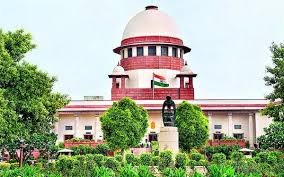
New Delhi, September 24, 2025: The Supreme Court on Monday stayed the Madras High Court’s controversial ruling that marriage under the Indian Christian Marriage Act, 1872 amounts to automatic conversion to Christianity and results in the loss of Scheduled Caste (SC) status.A bench of Justices Vikram Nath and Prashant Kumar Mishra issued the stay while hearing a special leave petition filed by V. Amudharani, Chairman of Theroor Town Panchayat, who challenged the High Court verdict.

Background of the Case
The dispute arose after the Madras High Court, in a ruling delivered by Justice L. Victoria Gowri, held that Amudharani — who married a Christian man in 2005 at St. Antony’s Church in Kulasekaramputhoor — could no longer claim her SC status as a member of the Hindu Pallan community.The High Court observed that participation in Christian marriage rites, including the publication of banns, signaled a change in religious identity, even without formal baptism. Consequently, the court declared that Amudharani fell under the Backward Classes category, disqualifying her from holding the SC-reserved post of panchayat chairman.
The Legal Challenge
The case began when petitioner V. Iyyappan questioned Amudharani’s eligibility for the SC-reserved office, citing her marriage under the Indian Christian Marriage Act. The High Court supported this view, noting that the Act does not permit civil interfaith marriages and effectively treats both spouses as Christians.Relying on the Constitution (Scheduled Castes) Order, 1950, the High Court directed authorities to remove Amudharani from office under Section 50(1)(ddd) of the Tamil Nadu District Municipalities Act, 1920.
Supreme Court’s Intervention
The apex court, however, stayed the operation of the Madras High Court’s order, putting the disqualification on hold. The matter will now be taken up for further hearing after responses to the Supreme Court’s notice are received.The next date of hearing is expected to be scheduled shortly.